









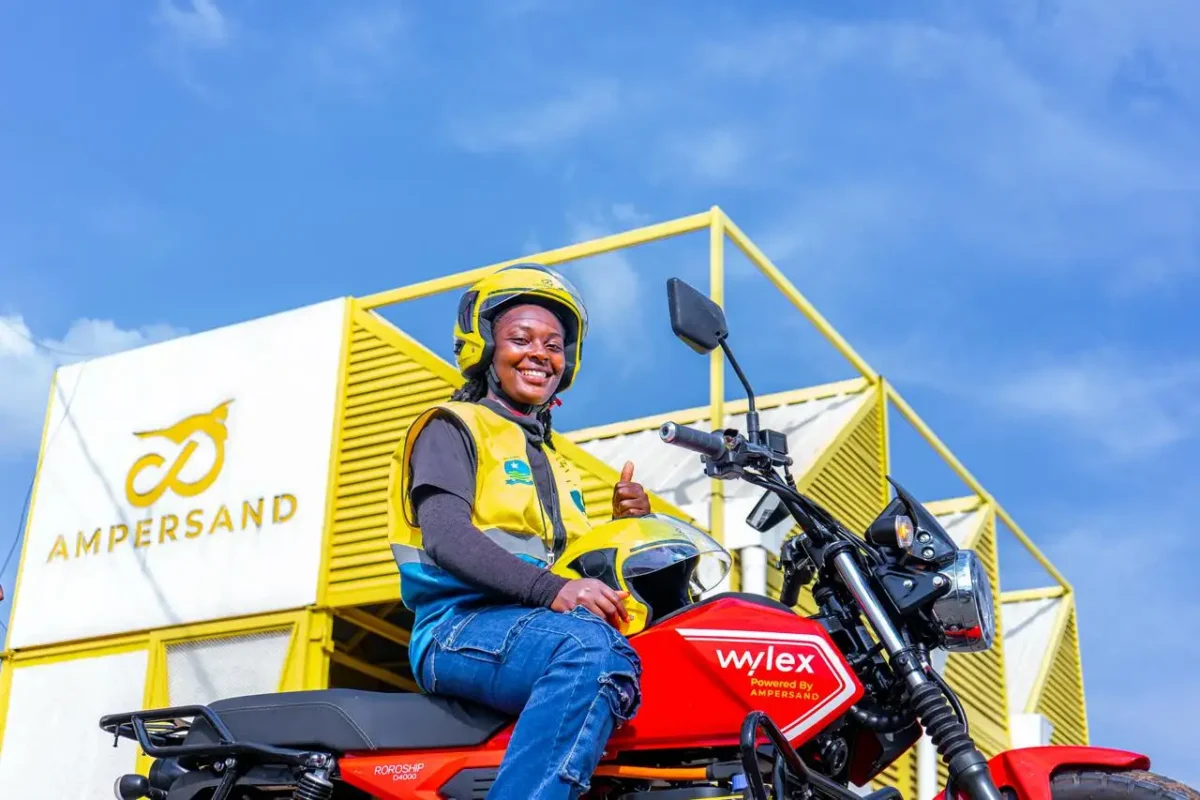
Nairobi’s riders aren’t switching to electric because they’re obsessed with the climate, they’re switching because the math finally makes sense. For the first time, the hustle is becoming digitized, de-carbonized, and significantly more profitable
The most critical part of a rider’s day happens before they even kick up the stand. Thanks to M-Pesa Ratiba, the automated standing order feature that went mainstream in 2024, the daily hustle is now automated.
Financing giants like M-KOPA and Watu use these automated pings to collect daily lease payments, typically between KES 400 and KES 500. If the payment clears, the bike’s IoT module receives a digital green light, unlocking the motor for the day. It’s a ruthless but efficient system where no payment means no torque. For the rider, this model has replaced the anxiety of manual payments.

Then a rider rolls into a Spiro or ARC Ride swap station in CBD, they’re looking for a QR code. This is where Daraja 3.0 (Safaricom’s latest API gateway) shows its muscles.
A quick scan triggers an STK Push. In the background, M-Pesa’s Fintech 2.0 architecture, which now handles up to 12,000 transactions per second, processes the swap fee in milliseconds. The moment the transaction hits the ledger, a locker door pops open with a fresh, 100% charged battery.
From Empty to Full in 45 seconds, all without touching a single note of paper money.
If M-Pesa is the nervous system of this revolution, then Nairobi’s physical landscape is the body undergoing a rapid transformation. We are witnessing the slow death of the petrol station as we knew it.
In February 2026, the Ministry of Roads and Transport officially launched the National E-Mobility Policy, and with it came the Green Plate mandate. These bright green reflective number plates are a digital pass.
Under the new policy, Green Plated vehicles are beginning to see perks that petrol heads can only dream of, preferential parking in the CBD and, crucially, access to dedicated “Green Stages.” Urban planners are finally redesigning the chaotic matatu and boda stages to include high-speed charging points, turning a 10-minute break into a 20% battery top-up.
For years, Kenya Power (KPLC) struggled with surplus energy at night but in 2025 alone, electricity consumption from EV charging surged by 188%.To fuel this, the E-Mobility Tariff has created a new kind of “Happy Hour.” Between midnight and 5:00 AM, the cost of power drops significantly (to roughly KES 8 per kWh).
This is when the large-scale battery barns in Industrial Area and the charging depots for electric buses like BasiGo gulp down the grid’s excess power as for the fleet owner, this is the difference between a slim margin and a massive profit.
It’s not just for the commercial riders, either. If you’re at TRM (Thika Road Mall) or The Hub Karen, EV charging stations have moved from the basement corner to the front row.
The numbers don’t lie. According to recent 2026 industry data, electric motorcycles now account for over 7% of all new registrations in Kenya. That might sound small until you realize it was nearly 0% just three years ago. With the National E-Mobility Policy now mandating that 5% of all new parking spots in Nairobi must be EV-ready, the infrastructure is no longer a chicken-and-egg problem, the egg has hatched.
E-mobility was never just about saving the planet. It’s a masterclass in local adaptation. By stripping away the complexity of petrol engines and replacing them with the simplicity of M-Pesa APIs and Battery Swapping, Nairobi has built a transport model that is uniquely, unapologetically Kenyan.